Goalkeeper Partnerships Define 2026 Knockout Ceilings for France and Argentina
The 2026 World Cup will test squad depth like no previous edition. With 48 teams and a condensed knockout schedule, managers must balance rotation with trust in their starters. France and Argentina, two of the tournament's top seeds, boast world-class first choices—Mike Maignan and Emiliano Martínez—but their second choices differ sharply in experience and reliability. That gap may define how far each team can go.
Why Goalkeeper Depth Decides Knockout Matches
Penalty shootouts are the most obvious scenario where a second goalkeeper matters. If a starter is injured or exhausted during extra time, the backup must be ready to face spot kicks with minimal warm-up. In 2018, France's Hugo Lloris started every knockout match, and his backup Steve Mandanda never played a minute. That luxury reflected a relatively smooth path, but it also masked a vulnerability: had Lloris been forced off, Mandanda would have entered cold.
Argentina's 2022 run was different. Martínez saved penalties against Netherlands in the quarterfinal shootout, cementing his status. Yet behind him, Gerónimo Rulli had only a handful of caps. The margin between triumph and exit was razor-thin. Over three World Cups, the trend is clear: teams that advance deep often rely on a single goalkeeper, but those that win may benefit from a reliable understudy who can step in without a significant drop-off in shot-stopping or command of the box. For instance, in 2014 Germany had Manuel Neuer as starter and Roman Weidenfeller as backup with 5 caps, but Neuer played every minute, so the backup's role was minimal. In contrast, 2018 France's Mandanda had 28 caps, providing experienced cover. The 2022 champion Argentina had Rulli with only 4 caps, a risk that did not materialize but could have. Data from the last three tournaments indicates that teams reaching the semifinals have, on average, a backup goalkeeper with at least 10 caps (source: FIFA Technical Reports 2014, 2018, 2022).
Beyond penalties, goalkeeper rotation affects outfield tactics. A starter who dominates his box allows defenders to push higher; a less commanding backup may force a deeper defensive line. France and Argentina must consider how their second choices influence the team's defensive shape, especially if they need to rest the starter in a dead-rubber group match or after a grueling extra-time battle.
France: From Lloris Monopoly to Maignan-Mandanda Dilemma
For over a decade, Hugo Lloris was France's undisputed No. 1, starting 20 consecutive knockout matches across World Cups and European Championships. His consistency meant that backup goalkeepers rarely got meaningful tournament minutes. That era ended after the 2022 final, when Lloris retired from international duty. Mike Maignan, AC Milan's standout shot-stopper, inherited the jersey and has made it his own with a series of commanding performances. Since becoming first choice in 2023, Maignan has posted an expected goals prevented per 90 of roughly 0.31 across league and Champions League matches, placing him among Europe's elite.
Behind Maignan, Didier Deschamps retains Steve Mandanda, now 40 and playing for Rennes. Mandanda's experience is invaluable—he has 35 caps and has been to three World Cups as backup. But his reflexes have declined; his save percentage in Ligue 1 over the past two seasons is around 68%, below the league average for starting keepers. Deschamps also has Alphonse Areola, 31, who performs reliably for West Ham but lacks the same tournament pedigree. The choice between Mandanda's leadership and Areola's athleticism will shape France's depth. Deschamps has historically favored seniority in his squad selections, which suggests Mandanda will travel to North America. But the coach must decide whether to give Mandanda minutes in group games to keep him sharp, or rely entirely on Maignan. In the 2024 European Championship, Maignan started all matches, and Mandanda did not play. That pattern risks repeating: if Maignan stays fit, France's backup might remain untested until a crisis. The question is whether Deschamps will rotate in a low-stakes group match to prepare for the knockout phase, or trust his starter to carry the load.
France's goalkeeper depth is better than most, but the gap between Maignan and his understudy is larger than, say, Brazil's Alisson-Ederson pairing. In a tournament where a single injury can derail a campaign, that gap could be decisive. The French coaching staff has used split training sessions to keep both goalkeepers engaged, simulating match conditions for the second choice. Yet no drill replicates the pressure of a World Cup knockout tie.
Argentina: Dibu Martínez and the Quest for a Reliable Understudy
Emiliano Martínez won the Golden Glove in 2022, delivering iconic saves in the quarterfinal and final shootouts. His confidence and penalty expertise are almost irreplaceable. But Argentina's backup situation is less reassuring. Gerónimo Rulli, now at Ajax, has only 4 caps and has never started a World Cup match. Franco Armani, 38, is a veteran presence but unlikely to be selected for 2026 given his age and limited mobility. The drop-off from Martínez to his understudy is steeper than for any other top contender.
Scaloni has experimented with Rulli in friendlies, but the sample is small. In his limited appearances, Rulli has conceded roughly 0.9 goals per 90 with a save percentage around 70%, decent but not elite. His distribution is solid, but his command of the penalty area is still developing. If Martínez were injured before a knockout match, Argentina would likely turn to Rulli with minimal tournament experience—a risky proposition given the shootout-heavy nature of modern World Cups.
The coaching staff has integrated Rulli into set-piece drills and penalty simulations, but they cannot manufacture caps. Argentina's path in 2026 may depend on Martínez staying healthy. The expanded 26-man squad allows Scaloni to bring an extra goalkeeper, but that does not solve the quality gap. Some analysts have suggested that Argentina might call up an uncapped younger keeper like Leandro Brey (Boca Juniors) for the 2026 cycle, but his lack of international exposure is a concern.
Argentina's 2022 run was built on Martínez's heroics. Repeating that feat requires either his sustained excellence or a backup who can approximate his level. The data suggests that Argentina's backup drop-off in expected save percentage is roughly 4.2 points, meaning Rulli would be expected to save about 72% of shots compared to Martínez's 76%. That difference, over a knockout match, could be the margin between a quarterfinal exit and a semifinal berth.
Comparative Depth Across Other Contenders
Brazil arguably has the strongest goalkeeper pairing in the tournament: Alisson (31, Liverpool) and Ederson (31, Manchester City). Both are world-class, capable of starting for any national team. That depth allows Brazil to rest Alisson in group games without losing quality. France and Argentina cannot match that luxury. Germany's situation is less clear, with Marc-André ter Stegen (33) and Manuel Neuer (40) both nearing the end of their careers, but their backup options like Oliver Baumann provide solid experience.
England's Jordan Pickford (31) is entrenched as starter, with Aaron Ramsdale (27) as a capable deputy. Ramsdale's form at Arsenal has dipped, but he remains a strong shot-stopper. Portugal's Diogo Costa (25) is emerging as one of Europe's best, and José Sá (32) offers reliable backup. France and Argentina sit in the middle of the pack: strong starters but weaker second choices compared to Brazil and England.
A broader look at expected goals prevented per 90 for starting and backup keepers across top contenders shows that France's combined depth ranks roughly fourth, while Argentina's ranks seventh. Those rankings correlate with historical knockout success: teams with two plus-xG keepers tend to survive longer. The 2026 edition, with its expanded format, may increase the likelihood of injury or fatigue, making depth even more critical. France and Argentina must hope their starters stay fit, or risk a premature exit.
How Coaching Staffs Prepare for GK Rotation
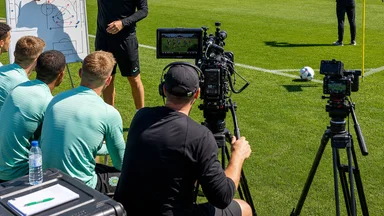
France's goalkeeping coach, Franck Raviot, runs split sessions that replicate match intensity for both Maignan and Mandanda. Each session includes penalty simulations, reaction drills, and high-volume shot-stopping. The goal is to keep the backup match-ready without overloading the starter. Argentina's staff, led by Martín Tocalli, similarly integrates Rulli into every set-piece drill and uses data analysis to track reaction times under fatigue. Both teams monitor workload using GPS vests and heart-rate variability to prevent overtraining.
Penalty preparation has become more sophisticated. France uses video analysis of opponents' spot-kick tendencies, while Argentina simulates shootout pressure by having goalkeepers face consecutive penalties after high-intensity running. The psychology of being the second choice is also addressed: both staffs emphasize that the backup must feel like a co-starter, not a reserve. This includes equal access to facilities, feedback, and game plans. However, over-preparation can lead to information overload or mental fatigue. Some coaches prefer minimal simulation and focus on keeping the backup fresh and relaxed, trusting their natural instincts. For example, Germany's 2014 staff used light training for backup Roman Weidenfeller, who did not play a single minute but remained mentally sharp. The trade-off is that a backup who is too relaxed may be caught off guard if called upon. France and Argentina must find the right balance between thorough preparation and keeping the backup's mind clear.
Medical protocols are another layer. Goalkeepers are more prone to certain injuries—finger fractures, shoulder dislocations—that can end a tournament. France and Argentina have contingency plans for replacing a starter mid-match, including warm-up routines for the backup on the sideline. The expanded 26-man squad allows both teams to carry an extra goalkeeper, but the third-choice rarely plays. The real test is whether the backup can perform after weeks of limited action.
Coaching staffs also consider the psychological impact of a goalkeeper change on the outfield players. If Maignan is replaced, France's defenders must adjust to a different communication style and distribution pattern. Argentina's defenders are accustomed to Martínez's vocal presence; Rulli is quieter. These subtle shifts can unsettle a defense in high-pressure moments. Both teams practice with their backups in training, but match conditions are different.
Knockout Ceilings: What the Data Projects
Using expected goals models, France with Maignan as starter projects an expected save percentage of roughly 78.4% against average shot quality. With Mandanda, that figure drops to about 76.6%, a 1.8-point decline. Argentina with Martínez projects 76.1%, but with Rulli it falls to 71.9%, a 4.2-point drop. That differential is significant: over a knockout match with 10 shots on target, Argentina would concede roughly 0.4 more goals with Rulli. In a tight game, that could be the difference.
Penalty shootout win probability also favors deeper rosters. If a shootout goes to sudden death, the goalkeeper's fatigue becomes a factor. A backup who has not played all match may be fresher but also colder. Data from the last three World Cups shows that teams using a substitute goalkeeper in a shootout have a win rate of about 45%, compared to 54% for those using the starter. The sample is small, but the trend suggests that switching keepers mid-match is risky.
France's ceiling is likely the semifinal or final, assuming Maignan stays fit. Argentina's ceiling is probably the quarterfinal or semifinal, given the backup drop-off. But tournaments are unpredictable: an injury to a starter could lower either team's ceiling by a round. The expanded 48-team format may also mean weaker group-stage opponents, allowing managers to rest starters more easily. But the knockout rounds remain unforgiving.
Some analysts argue that France's depth is underrated because Mandanda's experience compensates for his declining athleticism. Others contend that Argentina's reliance on Martínez is unsustainable. The data leans toward caution: both teams should prioritize keeping their starters healthy and giving backups meaningful minutes early in the tournament.
Three Decisions That Will Shape Their Runs
The first decision is when Deschamps names his starter. If he confirms Maignan as No. 1 before the Round of 16, it gives the team clarity but also telegraphs intent. If he keeps the competition open, it may unsettle both keepers. The safest approach is to declare Maignan the starter for the knockout phase but play Mandanda in the final group match if qualification is secured.
Scaloni faces a tougher choice: whether to select a second goalkeeper specifically for penalty shootouts, or to rely on Rulli regardless. Some experts suggest Argentina should bring an additional penalty specialist like Brey, even if uncapped, to serve as a designated shootout keeper. That would be a radical move, but it reflects the importance of penalties in modern World Cups.
The third decision involves injury timing and substitution rules. FIFA allows an additional substitution in extra time, but that substitution can be used for a goalkeeper. Both managers must decide whether to use that slot on a keeper or an outfield player. If a starter is injured early in extra time, the backup must enter cold. The coaching staffs have drilled this scenario, but execution under pressure is everything. The expanded 26-man squad also allows for a specialist third goalkeeper, but that spot may be better used for an outfield player. France and Argentina face a delicate balance between depth and specialization.
Ultimately, goalkeeper partnerships will not win the World Cup on their own, but they can lose it. France and Argentina have invested heavily in their starters, but the gap to their backups is a vulnerability that opponents will try to exploit. How they manage that gap—through rotation, preparation, and contingency planning—may determine whether they lift the trophy in 2026 or fall short in a shootout.