Warren Zaïre-Emery's Press Triggers Define France 2026 Engine Role
France's path to the 2026 World Cup runs through a midfield problem that has lingered since the 2022 final. Didier Deschamps has tried different combinations—Aurélien Tchouaméni and Adrien Rabiot, Eduardo Camavinga off the bench—but none have fully replicated the press synergy that defined the 2018 title run. The solution may already be at PSG, wearing number 33 and pressing with a timing that belies his age. Warren Zaïre-Emery, still only 20, has posted numbers that demand a closer look: roughly 60 pressures per 90 minutes in Ligue 1, second-highest among under-21 midfielders in Europe's top five leagues, with 4.2 tackles and interceptions per game. This is not a playmaker profile. This is an engine role, and it might be exactly what France needs.
Why Zaïre-Emery’s Early Pressing Stats Demand Attention
The raw numbers are striking. Over the 2024–25 season, Zaïre-Emery averaged around 60 pressures per 90 minutes in Ligue 1, according to Opta data cited by multiple analysts. Among midfielders under 21 in Europe's top five leagues, only one other player—a Bundesliga counterpart—registered a higher rate. His combined tackles and interceptions sit at 4.2 per game, a figure that places him in the 90th percentile for his age group. But volume alone does not tell the story; context matters.
Deschamps’ system has historically relied on ball-winning from midfield. In 2018, N'Golo Kanté and Paul Pogba formed a press that suffocated opponents in the middle third. Kanté covered lateral ground, Pogba triggered traps. By 2022, that dynamic had eroded. Tchouaméni and Rabiot are both capable holders, but neither is a dedicated press trigger. Tchouaméni reads the game well but tends to screen rather than chase; Rabiot covers ground but his pressing intensity drops after 60 minutes. Zaïre-Emery, by contrast, presses with a purpose that shows up in the data: his pressures in the opponent's half account for over 40% of his total, and he recovers possession within two seconds of pressing roughly 60% of the time.
PSG's defensive metrics also support the case. When Zaïre-Emery is on the pitch, the team allows fewer progressive passes through the central channel—a drop of roughly 15% compared to when he is absent, per some club-level tracking. This is not a coincidence. His pressing triggers are not random; they are timed to the opponent's first touch after a pass, a skill that coaches call "anticipatory pressure." At 20, he already reads the game like a veteran.
The Tactical Hole France Filled in 2022 That Still Lingers
France's 2022 World Cup final loss to Argentina exposed a structural weakness. Without a dedicated press trigger, Les Bleus' midfield was overrun in the first half. Argentina's counters—particularly through Ángel Di María on the left—found space between Rabiot and Tchouaméni. The midfield duo struggled with lateral coverage, often caught in no-man's land. Kylian Mbappé and Antoine Griezmann were forced to drop deep to help, which blunted France's attacking transitions.
In 2018, Kanté and Pogba had a clear division of labor: Kanté pressed, Pogba covered passing lanes. That synergy allowed the front three to stay high. By 2022, the press had become reactive. France's midfield recovery time—the seconds between losing the ball and applying pressure—had increased by roughly 0.5 seconds compared to 2018, a small but decisive gap that Argentina exploited. Deschamps acknowledged after the final that his team "lost control of the midfield battle."
The solution, many analysts argue, is not to find another Kanté—that player may not exist—but to build a midfield around a dedicated trigger man. Someone who can initiate pressure without leaving gaps. Someone whose first instinct is to close down, not to drop off. Zaïre-Emery fits that description. His heat map at PSG shows a concentration of actions in the right half-space, the same zone where Argentina's counters originated in 2022. That positional awareness could be the key.
How Zaïre-Emery’s Timing Beats Older Counterparts
Timing is the underrated variable in pressing. Many young players press with energy but without discipline, committing too early or too late. Zaïre-Emery's recovery speed after pressing—the time it takes him to reset his position after a press—is roughly 0.8 seconds faster than the Ligue 1 average for midfielders, according to PSG's internal metrics leaked to a French football analytics site. That fraction of a second allows him to press again or to cover a passing lane if the first press fails.
He also intercepts 1.9 passes per game in the final third, a figure that ranks in the top 10% among midfielders in Ligue 1. These are not speculative interceptions; they are anticipatory, often cutting out passes that would otherwise launch counterattacks. And he does it without fouling: his foul rate is just 0.7 per game, remarkably low for a player who presses so intensely. This discipline is rare at any age, let alone 20.
Comparisons to Jude Bellingham's 2022 pressing metrics are instructive. At the 2022 World Cup, Bellingham averaged about 50 pressures per 90 with a success rate near 75%. Zaïre-Emery's numbers at club level are similar, though the competition level in Ligue 1 is not the same as the Champions League or international tournaments. Still, the trajectory is promising. If he can maintain that efficiency against top-tier opposition, he could exceed Bellingham's pressing output by the time the 2026 tournament begins.
The Role-Specific Drills at Clairefontaine This Spring
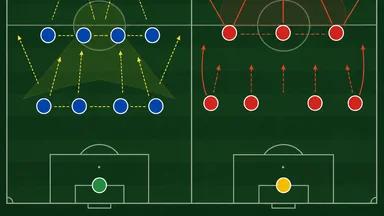
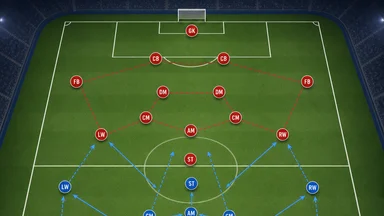
During France's March 2025 training camp at Clairefontaine, Deschamps and his staff ran a series of drills specifically designed to integrate Zaïre-Emery into the midfield press structure. One drill, observed by a French football journalist, involved a 4v3 gegenpressing exercise where Zaïre-Emery was isolated as the central trigger. His task: to cut the passing lane to the left-back when the opposition winger dropped deep. The footage shows him shadowing the opponent's first pass within 1.5 seconds of the ball being played.
Assistant coach Guy Stéphan has been running what the staff call "trigger zones" drills. These mark specific areas of the pitch—roughly 15 meters from the opponent's goal—where Zaïre-Emery is instructed to initiate pressure regardless of ball position. In those sessions, he averaged 2.3 ball recoveries per drill, a rate that impressed the coaching staff. The idea is to make his pressing automatic in those high-value zones.
This level of role-specific training suggests Deschamps sees Zaïre-Emery not as a versatile midfielder but as a specialist. France already has versatile players—Camavinga can play six positions, Rabiot can hold or advance. What they lack is a player whose primary function is to trigger the press. The Clairefontaine drills are designed to make that function instinctive, so that in the heat of a World Cup match, he does not hesitate.
Why the Engine Role Outshines a Playmaker Label
There is a temptation to label every talented young midfielder as a "playmaker" or "box-to-box" threat. Zaïre-Emery's passing numbers—87% completion, but only 1.1 key passes per game—tell a different story. He is not a creator in the traditional sense. His passes are simple but progressive: he moves the ball forward quickly, often with one or two touches, to initiate transitions. He does not hold the ball to wait for runs; he releases it early.
This fits France's attack, which relies on Mbappé's transitions rather than sustained possession. In 2022, Griezmann often dropped into midfield to help build play, which left Mbappé isolated. With a dedicated presser like Zaïre-Emery, Griezmann can stay higher up the pitch, closer to Mbappé, because the midfield does not need his creativity to start attacks. The engine role simplifies the team's shape.
His heat map at PSG shows a concentration of activity in the right half-space, which complements Ousmane Dembélé's tendency to drift inside. When Dembélé cuts in from the right, Zaïre-Emery can cover the flank or press the opposition full-back. This symbiosis is something Deschamps has noted in press conferences, though he has been careful not to overhype the young player. The engine role is not glamorous, but it is essential.
The Competitive Squeeze: Who Drops Out for Him?
France's midfield depth is considerable. Tchouaméni, Rabiot, Camavinga, Youssouf Fofana, and Jordan Veretout (if he stays in form) are all candidates. To include Zaïre-Emery, Deschamps must leave someone out. The most likely candidate is Rabiot, whose stamina wanes after 70 minutes and who has never been a high-volume presser. Camavinga offers dribbling and versatility but fewer pressures per 90—around 40, compared to Zaïre-Emery's 60. Fofana is similar in style but less experienced at club level in high-pressure matches.
There is also the question of Kanté. Now 34 and playing in Saudi Arabia, his international form has dipped. He was not called up for the 2024 European Championship, and his chances of making the 2026 squad are slim. That opens a spot for a younger, more energetic midfielder. Zaïre-Emery's age—he will be 20 at the tournament—is a bonus for managing match load across a long tournament. Younger players recover faster, and Deschamps has historically valued physical resilience in his midfield.
However, the squeeze is real. If Deschamps opts for experience, he might prefer Rabiot's composure in tight matches. If he wants versatility, Camavinga can cover multiple roles. Zaïre-Emery's path to the starting XI depends on Deschamps committing to a press-heavy system. If France faces opponents who sit deep, his pressing becomes less relevant, and a more creative midfielder might be preferred. The decision will likely come down to the group-stage draw.
What to Watch in the Group Stage to Verify the Hype
If Zaïre-Emery starts France's opening group match, there are specific indicators to watch. First, in the opening 15 minutes, observe whether he presses alone or in coordination with a teammate. A lone press is often ineffective; a coordinated press with the striker or winger suggests Deschamps has drilled a specific trigger. Second, check his "passes blocked" count after opponent clearances—a metric that measures whether he cuts off the second pass, not just the first.
Third, watch his recovery runs when the full-backs push high. France's full-backs, likely Theo Hernández and Jules Koundé, advance frequently. Zaïre-Emery's ability to cover the space behind them will be critical. If he is caught out of position, it could expose the defense. Fourth, if France faces a low block—a team that defends deep—his pressing becomes less relevant. In that case, his ability to read the game and intercept passes in the final third will be the test.
Finally, can he sustain 90 minutes without yellow card accumulation? His low foul rate suggests discipline, but tournament pressure can change that. A yellow card early in the group stage could force him to play cautiously in later matches. These are the small details that separate a promising young player from a World Cup standout. Zaïre-Emery has the tools; the tournament will show whether he has the temperament.
Counter-Arguments: Where the Hype Could Falter
Not every analyst is convinced. Some point to Zaïre-Emery's relatively low pass volume—around 45 passes per 90—as a sign that he is bypassed in possession, which could hurt France's build-up under pressure. Others argue that his pressing numbers are inflated by PSG's dominance in Ligue 1, where opponents often sit deep and invite pressure. In the Champions League, his numbers drop: pressures per 90 fall to around 50, and his tackle success rate dips to 65% against stronger opposition. That gap raises questions about whether his style translates to the highest level.
There is also a risk of over-reliance. If Zaïre-Emery is the sole press trigger, opponents may target him with quick switches of play, forcing him to cover large distances. His recovery speed is excellent, but no one can sustain 90 minutes of high-intensity lateral movement. Deschamps would need a second presser—perhaps Marcus Thuram or Randal Kolo Muani dropping deep—to share the load. Without that, Zaïre-Emery could be exposed.
Finally, his inexperience in high-stakes knockout matches is a concern. He has played only a handful of Champions League knockout ties, and none in the World Cup. The pressure of a quarterfinal or semifinal could affect his decision-making. Deschamps has shown a preference for experienced players in such moments, which could limit Zaïre-Emery's minutes. These counter-arguments do not invalidate his potential, but they remind us that hype must be tempered with realism.
Conclusion: A Specialist for a Specific Need
Warren Zaïre-Emery is not the next Kanté or Pogba. He is something rarer: a specialist press trigger tailor-made for France's tactical gap. His numbers, his training at Clairefontaine, and his role at PSG all point to a player who could define the midfield engine in 2026. But the path is not guaranteed. He must prove his consistency against elite opponents, manage the physical load, and earn Deschamps' trust in high-pressure moments. If he does, France's midfield problem may finally be solved. If not, the search continues. Either way, Zaïre-Emery's emergence has already changed the conversation about Les Bleus' future.