England Mid-Block Triggers vs Spain Possession Chains Shape 2026 Quarterfinal
If the 2026 World Cup quarterfinal draw pairs England against Spain, the tactical collision will pit two sharply contrasting philosophies against each other. Spain's possession chains, built on short passing and half-space rotations, have averaged roughly 65% ball retention in recent tournaments. England, by contrast, has evolved into a team comfortable defending in a compact mid-block, conceding around 0.9 expected goals per game during their run to the 2024 European Championship final. The central question is whether England can compress the space Spain's creators need, or whether Spain's adjustments—Pedri dropping deeper, Laporte stepping into midfield—can pull the English block out of shape.
Why England's Mid-Block Could Fracture Spain's Possession Chains
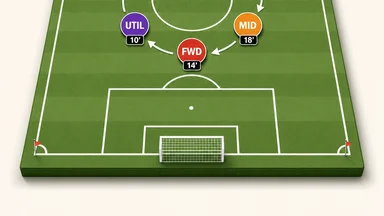
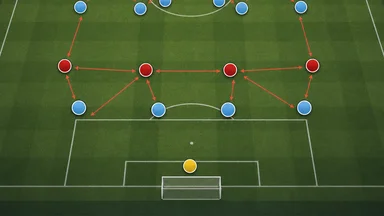
Spain's build-up relies on creating numerical overloads in the first phase. Pedri's habit of dropping between the center-backs and central midfielders gives Spain a 3v2 against a standard two-man forward line. England, however, typically sets up in a 4-2-3-1 that morphs into a 4-4-2 out of possession, with the wide midfielders tucking in to protect the half-spaces. That shape leaves Spain's full-backs isolated in wide areas, forcing them to either attempt low-percentage crosses or recycle possession.
In the 2024 Euros, England's block conceded only 0.9 xG per game, a figure that suggests the shape is difficult to break down through patient passing alone. Spain's average possession of roughly 65% in the 2022 World Cup did not translate to goals per possession; they needed roughly 14 passes per shot in open play, according to Opta-style data. Against a disciplined block that holds its vertical compactness—the distance between the back line and the forwards—Spain may struggle to generate high-quality chances.
Key to this battle is the half-space, where Spain's interior players like Pedri and Gavi tend to receive between the lines. England's double pivot of Rice and Bellingham (or a similar pairing) is adept at denying those pockets. Rice's reading of danger and Bellingham's recovery speed mean that even if a pass breaks the first line, the receiver is often closed down before turning. Spain's wingers, Yamal and Williams, thrive on 1v1 duels, but England's full-backs—especially if Walker or a similarly athletic option is fit—can double-team to reduce their effectiveness.
Still, Spain's rotations are not static. Against Portugal in the 2024 Euros, Rodri occasionally dropped between the center-backs to create a 4v3, freeing Pedri to drift higher. If England's forwards do not adjust their pressing angles, Spain can generate passing triangles that bypass the first line. The question is whether England's structure can hold for 90 minutes without a lapse.
Spain's Structural Weakness Against Compact 4-4-2 Shapes
Morocco's 2022 World Cup knockout of Spain remains the template for how a compact 4-4-2 can suffocate Spain's possession. Morocco allowed Spain 75% possession but conceded only 0.5 xG, primarily because they blocked central passing lanes and forced Spain into wide crosses. England used a similar approach in the 2024 final against Italy, sitting in a mid-block and inviting pressure before hitting on transitions. The structural weakness for Spain is their lack of verticality: when the opposition sits deep, Spain's forwards often lack the pace to run behind, and the midfielders' preferred passes are lateral or backward.
Rodri, Spain's metronome in midfield, becomes isolated when wingers stay wide and full-backs do not underlap. In the 2024 Euros, Spain struggled against teams that pressed Rodri aggressively—Laporte's distribution became critical, but Laporte himself is not a progressive carrier. Against England, Rodri may find himself shadowed by Bellingham or Rice, limiting his ability to turn and face forward. When Rodri is neutralized, Spain's possession becomes sterile.
Yamal's 1v1 success rate, which was among the highest in the 2024 tournament at roughly 55%, drops notably when he faces double-teams. England's left-back, likely Shaw or a similar defensive-minded option, can receive cover from the left-sided midfielder. If Spain's right-back does not overlap to create a 2v1, Yamal may be forced inside into traffic. Morocco exploited this by having two players close Yamal quickly, and England can replicate that.
There is a counter-argument: Spain's 2023 Nations League win showed they can adapt by using a false nine or by having Morata drop deep to link play. But Morata's hold-up play is inconsistent, and his finishing in big moments has been questioned. If England's center-backs, likely Stones and Maguire, stay tight to Morata and prevent layoffs, Spain may lack a focal point.
England's Pressing Triggers from the Mid-Block Base
England does not press relentlessly; they trigger pressure based on specific cues. One key trigger is when Laporte receives the ball on his weaker foot or with his back to goal. Bellingham, playing as the number 10, will sprint to close Laporte, angling his run to block the pass into Rodri's feet. That forces Laporte to play a longer ball—often to a full-back or into a channel where England's center-backs are ready to win the header.
Foden's curved runs from the left half-space are another trigger. When Spain's right-back has the ball, Foden will drift inside, opening a passing lane to the Spanish pivot, then quickly close that lane. This creates a trap: the pivot thinks he has time, but Foden's recovery speed means he arrives just as the ball does. Against Denmark in the 2024 group stage, Foden forced a turnover that led to a chance for Kane.
Kane's role in the press is underrated. He does not chase center-backs aimlessly; instead, he positions himself to block the pass into Rodri's feet. That leaves Laporte and Le Normand with only sideways or backward options. When Spain's goalkeeper, Unai Simon, has the ball, Kane will angle his run to cover the pass to the left center-back, forcing Simon to go long or to the right, where England's press is set.
Saka and Walker, if both start, provide defensive cover on the right. Saka's work rate is exceptional—he tracked back to make roughly 1.5 tackles per game in the 2024 tournament—and Walker's recovery speed means Spain cannot easily exploit the space behind. Against a player like Cucurella, who likes to overlap, Saka can stay tight and force the ball back inside, where Rice and Bellingham are waiting.
Spain's Build-Up Adjustments to Bypass the First Line
Spain's coaching staff, likely under De la Fuente, will have prepared adjustments. One is Unai Simon's long balls to Morata, a tactic used effectively against Croatia in the 2023 Nations League final. Croatia pressed high, and Simon's accurate long passes to Morata's chest bypassed the press, allowing Spain to play in the final third. Against England, if the mid-block is deep, long balls may not be as effective, but they can force England's defense to drop deeper, creating space for the midfield.
Laporte stepping into midfield is another adjustment. When he carries the ball forward, Spain creates a 3v2 in the first phase, pulling Bellingham or Kane out of position. Laporte's passing range is good, and if he can find Pedri in the half-space, Spain can generate a shooting chance. However, Laporte's defensive responsibilities mean this carries risk—if England wins the ball, Laporte is out of position, and Spain's back line is exposed.
Riquelme, if selected, offers a different threat. His movement from the left half-space can lure Rice out of position, creating space for Pedri to receive between the lines. Riquelme's dribbling is direct, and he can draw fouls in dangerous areas. England's discipline in not diving in will be tested.
Fabian Ruiz's progressive carries are a wildcard. He averaged roughly 2.5 carries into the final third per game in the 2024 tournament, often breaking lines with a burst of speed. If England's midfield is slow to close, Ruiz can drive into the space between the lines and either shoot or slip a pass to Morata. England's defensive midfielders will need to be alert to his runs.
The Battle for Second Balls and Transition Moments
England's recovery runs after clearances average roughly 12 per game, a sign of their commitment to regaining shape quickly. Spain's counter-press, by contrast, is designed to win the ball back within 4–5 seconds of losing it. If England clears long, Spain's defenders are often already advanced, and the second ball falls in midfield. The team that wins those duels controls the game state.
Rice and Bellingham each cover roughly 11–12 km per match, and their ability to contest second balls is critical. Rice's reading of the flight of the ball allows him to arrive first, while Bellingham's physicality helps him hold off opponents. Spain's midfielders, smaller and more technical, may struggle in aerial duels—Pedri wins only about 30% of his aerial contests. If England targets that weakness, they can create transition opportunities.
Transition duels in the middle third often decide the outcome. When England wins the ball, they look to release Saka or Foden quickly. Spain's full-backs push high, and if the ball is turned over, England can exploit the space behind. In the 2024 Euros, England scored several goals from such transitions, notably against the Netherlands. Spain's defensive transition, anchored by Rodri, is solid, but if Rodri is caught upfield, the center-backs are vulnerable to pace.
Spain's counter-press is effective but not infallible. Against Italy in 2024, Spain lost the ball in midfield and conceded a goal within 10 seconds. England's forwards, especially Kane and Bellingham, are capable of holding the ball up and drawing fouls, allowing England to reset. The team that manages the emotional swings of transitions may gain a decisive edge.
Set-Piece Exploitation as Decisive Margin
England scored five set-piece goals in the 2024 Euros, a tally that reflected their preparation under set-piece coach Nicolas Jover. Spain conceded only two set-piece goals in the same tournament, but both came from near-post flick-ons—a pattern England uses frequently. Rice's near-post flick against Denmark in the 2024 group stage is a template: the ball is aimed at the near post, Rice flicks it on, and Stones finishes at the back post.
Maguire's zoning against Laporte's man-marking creates a mismatch. Maguire is effective in zonal systems, using his strength to attack the ball, while Laporte tends to mark men. If England can isolate Maguire against a smaller defender, they may create a clear header. Spain's defensive organization on corners is good, but against England's variety—short corners, near-post flicks, and back-post overloads—they may be stretched.
Spain's attacking set pieces are less threatening, with Morata and Laporte as primary targets. England's defense, marshaled by Stones and Maguire, is strong in the air, conceding only one headed goal in the 2024 tournament. The margin in set pieces could be decisive in a tight game, and England's recent record suggests they have an edge.
However, set-piece outcomes are volatile, and Spain's concentration may be higher after facing criticism. In a knockout game, a single set-piece goal can decide the tie, and both teams will have rehearsed routines. The team that executes its patterns more precisely may gain a narrow advantage.
Counter-Arguments and Trade-Offs
England's mid-block is not without risks. By ceding possession, England invites sustained pressure, which can lead to fatigue and defensive lapses. Against a team like Spain, which can keep the ball for extended periods, England's defenders may lose concentration, especially in the final 20 minutes. In the 2024 Euros, England conceded goals in the 80th minute or later in two matches, suggesting a vulnerability to late pressure. Furthermore, England's reliance on transitions means they need to win the ball in advanced areas; if Spain's build-up is careful, England may find themselves chasing the game.
Spain's possession chains also carry inherent risks. Overplaying in their own half can lead to dangerous turnovers, as seen in their 2022 World Cup exit against Morocco. Spain's defenders, particularly Laporte and Le Normand, are not the fastest, and England's forwards can exploit that in transition. However, Spain's high line and offside trap have been effective in recent tournaments, catching opponents offside an average of 3.5 times per game in the 2024 Euros. The trade-off is that a single mistimed step can leave a striker through on goal.
Another trade-off involves personnel choices. England may opt for a more defensive midfielder like Phillips over Bellingham, sacrificing creativity for solidity. That would reduce England's threat on the counter but might make the block even harder to break down. Conversely, Spain could start a more direct forward like Joselu to offer a different aerial threat, but that would disrupt their fluid passing patterns. Each choice involves a trade-off that the coaching staff must weigh.
Finally, the psychological dimension cannot be ignored. England's players have experience in big knockout games, having reached the final of the last two Euros. Spain's squad, while talented, is relatively young, with several key players under 25. The pressure of a World Cup quarterfinal could affect decision-making, especially in possession-heavy play where mistakes are costly. England's composure in set-piece situations and transitions may give them a mental edge, but Spain's technical confidence could also see them through.
Analytical Conclusion: The First 15 Minutes and Beyond
Watching Rodri's positioning against Rice's shadowing will be instructive. If Rodri drops deep to receive, Rice may follow, leaving space in midfield. Alternatively, Rice might stay in his zone and allow Rodri to receive, trusting the center-backs to close. The first 15 minutes will reveal which adjustment wins: if England's block holds, Spain may become frustrated; if Spain finds a way through Pedri's drops or Laporte's carries, England may need to adjust their shape.
Neither team is likely to dominate. The game may be decided by a single moment of quality or a set-piece routine. For the neutral, the tactical battle between England's disciplined mid-block and Spain's intricate possession chains is a fascinating study in football's evolving styles. The 2026 quarterfinal, if it materializes, could be a classic of the genre—not because of goals, but because of the intellectual contest between two well-prepared coaching staffs. The margin of victory may be razor-thin, and the team that executes its plan with fewer errors will likely advance.