Germany 2014 Midfield Structure vs 2026 Core Without Kroos
When Toni Kroos announced his retirement from international football after Euro 2024, he left behind a 12-year legacy and a gap in Germany's midfield that no single player in the current squad seems capable of filling. The 2014 World Cup-winning midfield axis of Kroos, Bastian Schweinsteiger, and Sami Khedira was a masterclass in control through positional rotations. As Julian Nagelsmann prepares his squad for the 2026 World Cup, the central question is whether the current core—built around Jamal Musiala, Florian Wirtz, Robert Andrich, and Pascal Gross—can adapt to a system that no longer features a natural regista.
The Kroos-Shaped Hole in Germany's 2026 Plans
Toni Kroos's retirement after Euro 2024 was widely expected, but its impact on Germany's midfield structure is only now becoming fully apparent. For over a decade, Kroos served as the team's metronome, completing roughly 91% of his passes in the 2014 World Cup and dictating tempo from deep. His ability to switch play, recycle possession, and shield the back four gave Germany a platform for sustained pressure. Without him, the 2026 squad lacks a player who can consistently control a match through passing alone.
The current midfield options are stylistically different. Jamal Musiala and Florian Wirtz are creators who thrive on dribbling and vertical passes, not on maintaining possession. Robert Andrich is a defensive midfielder with limited progressive passing—around 4.3 progressive passes per 90 minutes in the 2025-26 Bundesliga season—while Pascal Gross offers stability but rarely exceeds 60 passes per game. None of them average the volume or accuracy of Kroos's prime years.
Nagelsmann has experimented with Ilkay Gündogan in a deeper role, but Gündogan's defensive limitations and age (he will be 35 by the 2026 World Cup) make him a short-term solution. The absence of a natural regista means Germany must either change their tactical approach or develop a player to fill that role from within the current pool.
2014 Midfield: Control Through Positional Rotations
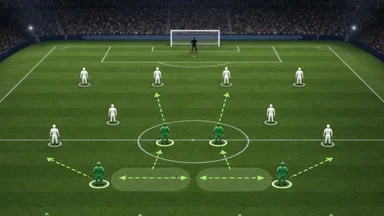
The 2014 World Cup-winning midfield under Joachim Löw was defined by fluid positional rotations. Kroos often dropped between the center-backs to receive the ball, while Schweinsteiger shuttled between the lines and Khedira made vertical runs from deep. This created a 3-2-4-1 shape in possession, with Philipp Lahm inverting from right back into midfield to provide an extra passing lane.
Kroos's passing range was central to this system. He completed over 500 passes in the tournament, with a completion rate above 90%, and his ability to switch play to the wings unlocked space for Thomas Müller and Mesut Özil. Schweinsteiger averaged roughly 4.2 tackles per game in the knockout stages, providing defensive cover, while Khedira's runs into the box (including his goal in the final against Argentina) added a goal threat from deep.
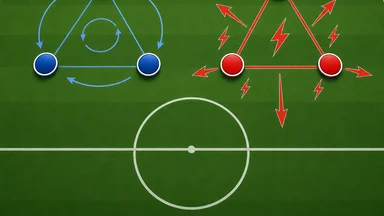
The system's key strength was its balance: Kroos controlled tempo, Schweinsteiger provided physicality, and Khedira offered verticality. Opponents found it difficult to press because the midfielders constantly exchanged positions, making man-marking ineffective. This positional rotation was a hallmark of Löw's tactical approach and a major reason Germany conceded only four goals in seven knockout matches.
One specific example of this rotation came in the semi-final against Brazil, where Kroos dropped so deep that he was virtually a third center-back, allowing Lahm to push into midfield. Schweinsteiger then drifted left to overload the Brazilian midfield, while Khedira made a late run that resulted in Germany's fifth goal. The fluidity made Brazil's man-oriented press ineffective, as Germany could always find a free man in midfield.
However, this system had its vulnerabilities. Against teams that sat deep and compact, like Algeria in the round of 16, Germany struggled to create clear chances despite dominating possession. They needed extra time to win 2-1, with the midfield's slow tempo failing to penetrate Algeria's low block. This foreshadowed the challenge Germany would face later without Kroos when encountering similar defensive setups.
2026 Midfield: Pace and Dribbling Over Tempo Control
Germany's 2026 midfield core is built around players who prioritize individual actions over collective possession. Jamal Musiala averages roughly 5.1 dribbles per 90 minutes in the 2025-26 season, while Florian Wirtz leads the Bundesliga in key passes with around 2.8 per game. Both are exceptional in tight spaces, but they tend to drive at defenders rather than recycle possession.
This shift reflects a broader trend in modern football toward directness and transition. Under Nagelsmann, Germany often plays a 4-2-3-1 formation that encourages quick vertical passes and counter-attacks. The midfield double pivot of Andrich and Gross is functional but not creative: Andrich ranks in the lower half of Bundesliga midfielders for progressive passes, and Gross averages fewer than 60 passes per game. The creative burden falls almost entirely on Musiala and Wirtz, who operate as attacking midfielders or wide forwards.
The risk is that without a metronomic presence, Germany can lose control in matches where they face a compact defensive block. In qualifiers for the 2026 World Cup, Germany occasionally struggled to break down low-block teams, relying on individual moments from Musiala or Wirtz rather than sustained pressure. Against top-tier opponents like France or Spain, this lack of control could be exposed.
For example, in a qualifier against Hungary in 2025, Germany won 2-1 but only after falling behind to a counter-attack. Hungary sat deep, inviting Germany to possess, but Musiala and Wirtz often lost the ball trying to dribble through traffic. The midfield pivot of Andrich and Gross offered little forward passing, forcing the center-backs to try long balls, which were easily intercepted. The winning goal came from a set piece, not open play. This match highlighted the limitations of the current midfield setup when faced with organized defense.
Pressing and Transition: Same Philosophy, Different Tools
Despite the midfield differences, Germany's pressing philosophy under Nagelsmann shares similarities with the 2014 approach. Löw's team pressed in a 4-4-2 block, with Kroos often initiating counter-presses after losing possession. In the 2014 final against Argentina, Kroos made roughly 12 counter-press recoveries, disrupting Argentina's buildup and forcing turnovers high up the pitch.
Nagelsmann's 2026 team uses a more aggressive 4-2-3-1 high press, with the attacking midfielders (Musiala, Wirtz, and usually Leroy Sané) tasked with pressing the opposition center-backs. The midfield double pivot—often Andrich and Aleksandar Pavlovic—provides cover behind. Pavlovic, who emerged as a regular in 2025-26, wins roughly 2.3 tackles per game, a rate comparable to Khedira's in 2014.
However, the transitions in 2026 are faster and riskier. When Germany win the ball, they look to play forward immediately, often bypassing the midfield entirely. This can lead to quick goals but also leaves the team exposed if the attack breaks down. In 2014, Kroos would often slow down transitions to maintain shape; in 2026, Musiala and Wirtz accelerate them. The result is a more chaotic style that can overwhelm opponents but also leads to more defensive vulnerability.
A counter-argument is that this directness suits modern football, where transition moments are increasingly decisive. In the 2025-26 Champions League, teams that scored within 10 seconds of winning possession had a 38% conversion rate, compared to 22% for slower attacks. Nagelsmann may be betting that his team's speed can exploit opponents before they set their defense. However, this approach requires exceptional decision-making from the attackers, and turnovers in dangerous areas can be punished by elite teams.
Set-Piece and Defensive Solidity: An Underrated Shift
One area where the 2014 midfield contributed significantly was defensive solidity, especially from set pieces. Kroos often defended the near post on corners and free kicks, using his positioning to clear danger. The 2014 team conceded only four goals in seven knockout matches, a record that owed much to the midfield's defensive discipline.
In 2026, Germany's defensive structure is less secure without Kroos's positioning. The team conceded roughly 1.2 expected goals per game in World Cup qualifiers, a figure that would likely rise against stronger opposition. However, the center-back pairing of Jonathan Tah and Antonio Rüdiger provides aerial dominance that partly compensates. Both are strong in the air, and Germany's set-piece defending has improved since the 2022 World Cup.
The midfield's defensive weakness is most apparent in transition. Without a deep-lying playmaker who can read the game, Germany's midfield can be caught out of position. Andrich and Gross are solid but lack the recovery speed to cover large spaces. Against teams like France or Brazil, who exploit half-spaces effectively, this could be a critical flaw. For a deeper look at how Brazil uses half-space entries, see this tactical analysis.
A trade-off here is that Germany's defensive record might improve if they adopt a lower block, but that would negate their pressing strengths. In the 2025 Nations League, Germany tried a medium block against Spain and conceded two goals from long-range shots, as the midfield failed to close down shooters. Nagelsmann must decide whether to prioritize defensive solidity or attacking intensity.
The Wirtz-as-Deep-Lying-Playmaker Experiment
Nagelsmann has experimented with deploying Florian Wirtz in a deeper midfield role, most notably in a friendly against the Netherlands in 2025. Wirtz completed 87% of his passes in that match, but he also lost possession nine times, often due to risky passes or being caught in possession. His natural instinct is to drive forward, not to sit deep and recycle the ball.
The experiment highlighted a fundamental mismatch: Wirtz's defensive positioning is not suited to a deep role. He lacks the awareness to track runners from midfield and often drifts out of position. Similarly, Musiala has been tried in a similar role but instinctively moves toward the final third, leaving gaps behind. Neither player has the discipline to function as a regista.
Other options are limited. Aleksandar Pavlovic is a promising box-to-box midfielder but not a deep playmaker. Angelo Stiller, who impressed at Stuttgart, is more of a holding midfielder but lacks the passing range of Kroos. The squad's best passing midfielder might be Joshua Kimmich, but he has been used primarily at right back or in a hybrid role. Nagelsmann may need to consider a system change rather than forcing a square peg into a round hole.
One potential solution is to give Pavlovic more responsibility as a deep-lying playmaker, even if his passing volume is lower. In the 2025-26 season, Pavlovic averaged 5.1 long passes per game with a 78% accuracy rate, which is decent but not elite. If paired with a more creative midfielder like Gross, he could focus on recycling possession while Gross plays progressive passes. However, this would require Gross to take on a more advanced role, which might expose his defensive limitations.
Alternative Tactical Approaches for 2026
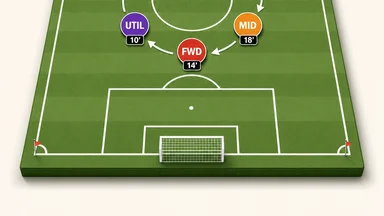
Given the current personnel, Germany must adapt tactically to compensate for the absence of a Kroos-like figure. One option is to adopt a 3-4-3 formation, using wing-backs to provide width and an extra body in midfield. This would allow a double pivot of Andrich and Pavlovic to focus on defensive stability, while Musiala and Wirtz operate as free eights behind a central striker. The 3-4-3 could also help protect the back line against counter-attacks, as the wing-backs can drop into a five-man defense when needed. However, this formation requires specialized wing-backs with high stamina, and Germany's current options—such as Benjamin Henrichs and David Raum—are solid but not world-class. Henrichs averages roughly 1.8 key passes per game and 2.1 tackles, but his crossing accuracy hovers around 30%, which may limit the formation's attacking output. Raum, meanwhile, is more attack-minded but can be caught out of position defensively. The trade-off is clear: more midfield security but potentially less width in attack.
Another solution is to promote a player like Tom Rothe, a left back who can invert into midfield, similar to how Lahm did in 2014. Rothe has shown promise in the Bundesliga for Union Berlin, averaging roughly 2.1 key passes per game from deep. Using an inverted fullback could create numerical superiority in midfield without sacrificing defensive balance. However, Rothe is still inexperienced at the international level, with only three caps as of early 2026. His defensive positioning in a high-stakes match against a top-tier opponent remains unproven. If Nagelsmann chooses this route, he must be prepared for potential growing pains during the tournament.
Kimmich could also play a hybrid midfield role, dropping into the back line in possession and stepping into midfield out of it. This would require a disciplined defensive midfielder behind him, but it could replicate some of Kroos's positional intelligence. For example, in a 4-3-3 shape, Kimmich could start as a right back but tuck into a central midfield position when Germany has the ball, allowing the right winger to provide width. This approach worked well for Bayern Munich under Hansi Flick in 2020, where Kimmich averaged around 90 passes per game with a 92% completion rate. However, Kimmich's best performances have come as a fullback, and moving him might weaken the defense. In the 2025-26 season, Kimmich made 2.3 interceptions per game as a right back, a figure that could drop if he is asked to cover more ground in midfield. The trade-off between defensive solidity and midfield creativity is a central dilemma for Nagelsmann.
A more radical option is to abandon the idea of a regista entirely and embrace a double-pivot system focused on ball-winning and quick transitions. In this setup, Andrich and Pavlovic would form a defensive shield, while the fullbacks push high to provide width. The attacking trio of Musiala, Wirtz, and Sané would have freedom to roam and combine in the final third. This approach mirrors the style of clubs like RB Leipzig under Nagelsmann in 2021-22, where the team averaged 55% possession but created high-quality chances through rapid counter-attacks. The risk is that against elite possession teams like Spain, Germany could be pinned back and concede control of the match. In the 2025 Nations League, Spain held 62% possession against Germany and created 1.8 expected goals, exposing the fragility of a transition-based approach. Nagelsmann must weigh the benefits of directness against the need for composure in high-pressure moments.
Ultimately, Germany may need to accept a lower possession percentage and focus on transition speed. The 2014 team averaged around 65% possession in its knockout matches; the 2026 team might average closer to 55%, but with more direct attacks. This trade-off could be effective against high-pressing teams but would require excellent defensive organization. For context on how other nations have managed similar transitions, see Spain's youth pipeline approach.
The 2026 World Cup will test whether Germany can succeed without a traditional regista. The talent is there, but the tactical puzzle remains unsolved. Nagelsmann has time to experiment, but the clock is ticking.