Croatia Dependence on Livaković and Labrović Tests 2026 Depth
When Dominik Livaković saved Rodrygo's penalty in the 2022 World Cup quarterfinal shootout against Brazil, he cemented his place in Croatian football folklore. The 27-year-old's performance that night—four saves across 120 minutes plus two more in the shootout—was the defining moment of a tournament in which Croatia reached the semifinals for the second consecutive time. But that run also exposed a fragility that few outside the camp have fully acknowledged: the depth behind Livaković is wafer-thin.
As of the 2024-25 season, Croatia's second-choice goalkeeper, Nediljko Labrović, has earned just two senior caps, both in friendlies against lower-ranked opposition. The third option, either Ivo Grbić or the uncapped Dominik Kotarski, brings even less experience. With the 2026 World Cup expanding to 48 teams—meaning more matches and a higher likelihood of rotation—the question is not whether Livaković can perform, but whether Croatia can survive without him.
Croatia's Goalkeeping Pipeline Faces Its Sternest Test
Livaković's heroics in Qatar were not an outlier. Across the 2022 tournament, he overperformed his expected goals (xG) by roughly +4.2, according to post-tournament analysis from Opta. He made 23 saves from shots worth a combined 8.8 xG, a rate that placed him among the top three goalkeepers of the tournament. But that performance also masked a structural issue: Croatia has not produced a reliable second-choice goalkeeper since Danijel Subašić retired after 2018.
Subašić was himself 33 when he started all seven matches at the 2018 World Cup, with no competitive minutes for his backup. The pattern is repeating. Between Subašić and Livaković, Croatia cycled through Lovre Kalinić, Simon Sluga, and Grbić, none of whom established themselves as a clear alternative. As of late 2024, the combined senior caps for all goalkeepers not named Livaković is fewer than 10. That is the thinnest depth of any team ranked in the FIFA top 15.
Labrović, who moved to Rijeka in 2023, has attracted attention with a save percentage above 88% in the HNL during the 2023-24 season. But the HNL is not the World Cup. His only appearances in a Croatia shirt have come against North Macedonia and Armenia—both friendlies where the opposition barely tested him. The step up to facing Brazil or France would be enormous.
The problem extends beyond the senior team. Croatia's U21 setup has not produced a goalkeeper who has forced his way into regular top-flight football abroad. Kotarski, on loan at Hadjuk Split from PAOK, has shown promise but remains untested in European competition. The gap between Livaković and the next generation is wide enough that any injury to the starter would force Croatia to rely on a goalkeeper with fewer than five caps in a knockout match.
Why a Strong GK-1/GK-2 Pair Matters More Than Ever
The 2026 World Cup will feature 48 teams and 104 matches, up from 64 in 2022. That expansion means more games in a condensed calendar, with group-stage matches spread across three time zones. For teams that advance deep into the tournament, the workload on starting goalkeepers could be unprecedented. Fatigue, both physical and mental, becomes a real factor.
FIFA's yellow-card accumulation rule also applies to goalkeepers. A booking in the group stage carries over to the knockout rounds, and two yellows trigger a suspension. In 2022, several teams risked their first-choice keeper carrying a card into the quarterfinals. Croatia themselves had Livaković on a yellow from the Japan match; any second booking would have forced a change.
Moreover, the expanded group stage means three matches in roughly 10 days, followed by a round of 32—a new knockout round. Teams that top their group will have an extra rest day before the round of 16, but those that finish second may face a quicker turnaround. A manager who trusts his second goalkeeper can rotate in the final group match if qualification is secured, preserving the starter for the knockout phase. Croatia, with no such trust, cannot do that.
History shows the cost of thin depth. The Netherlands started 2022 with Remko Pasveer as first choice, then switched to Andries Noppert—a debutant in the tournament—after an injury. Noppert performed admirably but was exposed in the quarterfinal shootout against Argentina. Croatia's own 2018 run relied on Subašić playing every minute; when he was injured in the semifinal against England, the backup, Kalinić, had not played a competitive minute in the tournament. Croatia lost that match 2-1 after extra time.
Another example comes from the 2014 World Cup, where Uruguay's backup goalkeeper Martín Silva had to step in after Fernando Muslera's suspension. Silva had only 10 caps before the tournament and conceded a crucial goal in a 1-0 loss to Costa Rica, contributing to Uruguay's early exit. Similarly, at the 2018 World Cup, Nigeria's Francis Uzoho, then 19, was thrust into the starting role due to injuries and made a costly error against Argentina. These cases highlight the risks of relying on an inexperienced second-choice keeper, a situation Croatia could face in 2026.
Conversely, some teams have successfully used deep goalkeeper rotations. In the 2010 World Cup, Spain's Vicente del Bosque trusted backup Pepe Reina in a group-stage match against Honduras after Iker Casillas had a minor knock. Reina kept a clean sheet, and Casillas returned for the knockout rounds, leading Spain to the title. That luxury of a reliable backup is precisely what Croatia lacks.
Livaković: Elite Shot-Stopper but Prone to Concentration Lapses
To understand Croatia's dependence, it helps to examine Livaković's strengths and weaknesses. At his best, he is a world-class shot-stopper. In the 2024-25 Ligue 1 season for Lyon, he posted a goals-prevented figure of roughly 0.79 per 90 minutes, meaning he saved about 0.79 goals more than the average keeper would from the same chances. That put him in the top quartile of European goalkeepers.
His penalty record is solid: of 19 penalties faced in his senior career, he has saved five, a rate of approximately 26%, well above the historical average of 18%. That is the kind of statistic that can win a shootout, as it did against Brazil and Japan in 2022.
But Livaković also has a weakness for concentration errors. In the 2023-24 season, he made three errors directly leading to goals, according to Opta. Two of those came from misjudging crosses—a recurring issue. His distribution accuracy on passes longer than 40 meters is below 70%, which limits Croatia's ability to transition quickly from defense to attack. Against high-pressing opponents, that inaccuracy can put the defense under immediate pressure.
Some analysts have noted that Livaković's shot-stopping numbers are inflated by the volume of shots he faces. Croatia's defensive structure, particularly under Zlatko Dalić, often invites pressure, meaning Livaković sees more attempts than a goalkeeper for a possession-dominant team. That volume can make him look busier than he is, but it also means any dip in form is magnified.
To put this in perspective, consider the trade-off: Livaković's aggressive style sometimes leads to high-risk decisions. In the 2022 semifinal against Argentina, he rushed off his line for a cross he couldn't reach, leaving an open net that Julian Álvarez nearly exploited. Against top-tier opponents, such lapses can be decisive. His backup, Labrović, might be more conservative, but that conservatism could reduce defensive errors while also limiting the team's ability to sweep behind a high line. Dalić must weigh these trade-offs when planning for 2026.
Labrović and the Next Generation: High Ceiling, Low Experience
Nediljko Labrović, at 1.94 meters, has the physical frame to command his area. His reflexes are excellent—his save percentage in the HNL for 2023-24 was above 88%, the highest in the league. He is comfortable coming off his line and has shown good one-on-one ability. But the gap between domestic form and international football is vast.
His two caps have come against North Macedonia (a 1-0 win in which he faced two shots) and Armenia (a 2-1 win with four shots on target). Neither match tested his decision-making under sustained pressure. In European competition, he has played only a handful of matches, none against top-tier opponents. The step up to a World Cup group match against, say, Morocco or Belgium would be a leap into the unknown.
Behind Labrović, the options are even less proven. Dominik Kotarski, 24, has been on loan at Hadjuk Split from PAOK, where he has started regularly but faces limited competition. Ivo Zlomislić, 23, plays for Rijeka and has featured in the HNL but has no senior caps. None of these goalkeepers have played in a top-five European league, nor have they faced a World Cup-level attack.
The U21 European Championship in 2025 could provide a testing ground, but that tournament comes only 12 months before the World Cup. Even if one of these keepers performs well, integrating them into the senior setup with so little time is risky. Croatia's goalkeeper coaching infrastructure, while solid, has not produced a steady pipeline of talent since the generation of Stipe Pletikosa and Subašić.
Some observers argue that Labrović's lack of experience could be an advantage: opponents have little footage to study, and he might surprise them with his athleticism. However, this counter-argument overlooks the fact that in high-stakes matches, composure often trumps raw ability. A goalkeeper who has never faced a penalty shootout in a competitive international match is more likely to freeze than one who has been through the crucible. Dalić must decide whether to gamble on potential or stick with the known quantity of Livaković, even if it means risking burnout.
Benchmarking Against Rivals: France, Brazil, Argentina Lead
Comparing Croatia's goalkeeper depth to other top teams reveals the scale of the problem. France enters 2026 with Mike Maignan as first choice and Alphonse Areola as backup—a combined 110-plus caps. Maignan is among the world's best, and Areola has Champions League experience. Brazil boasts Alisson Becker and Ederson, both world-class starters for Liverpool and Manchester City respectively. Argentina has Emiliano Martínez, a penalty specialist, and Juan Musso, a Copa América winner.
Germany's Manuel Neuer and Marc-André ter Stegen, though aging, have decades of high-level experience between them. Even England, with Jordan Pickford, Aaron Ramsdale, and Dean Henderson, has three goalkeepers with significant Premier League and international experience. Croatia's combined cap count for all goalkeepers other than Livaković is under 10, with an average age of roughly 24. The average years of top-flight experience for the backup is roughly 1.5, compared to an average of 8.1 for the top eight ranked teams.
That depth gap is not just about shots saved. It affects training intensity, tactical preparation, and the confidence of the outfield defenders. When a center-back knows the goalkeeper behind him has played only a handful of matches, he may become more conservative, retreating deeper and inviting pressure. That can undermine the entire defensive structure.
Some teams have successfully integrated an untested goalkeeper at a World Cup—think of Keylor Navas for Costa Rica in 2014—but those are exceptions. Navas had been a starter for Levante in La Liga before the tournament. Labrović has not faced a single match in a top-five league. The risk is substantial.
However, there is a counter-argument: Croatia's midfield dominance often limits opponents to long-range shots, which are easier for a goalkeeper to handle. If the defense remains compact, Labrović might not face many high-quality chances. But this logic assumes that Croatia will control possession against every opponent, which is not guaranteed. Against teams like Brazil or France, Croatia may be forced to defend deep, exposing the goalkeeper to crosses and through balls. In those scenarios, experience is invaluable.
How Zlatko Dalić Can Mitigate the Risk Before 2026
Dalić is aware of the issue. In press conferences during the 2024 Nations League, he mentioned the need to give Labrović more minutes. But talk is cheap. The manager has a window of roughly 18 months before the World Cup to build depth, and several concrete steps are available.
First, schedule friendlies against South American teams. Croatia's recent friendlies have been against European and North African opposition. A match against Uruguay or Colombia would give Labrović a taste of the intensity he would face in a knockout game. Second, use the Nations League to give Labrović a full match against a top-tier opponent, even if it means resting Livaković for a less critical fixture. The Nations League offers competitive, high-stakes matches that simulate tournament conditions.
Third, promote a third goalkeeper—Kotarski or Zlomislić—to the regular bench. Having a young keeper travel with the squad, train alongside Livaković, and observe matchday routines builds familiarity. If an emergency call-up is needed, that keeper will be less overwhelmed.
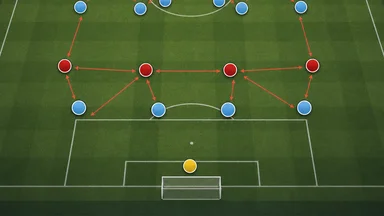
Fourth, adjust the defensive shape to protect the goalkeeper. Croatia often plays a mid-block that invites crosses and long-range shots. Shifting to a more compact defensive structure, with full-backs tucking in, could reduce the number of high-danger chances. That would reduce the burden on whoever is in goal.
Fifth, invest in video analysis tailored to the backup. Labrović should be studying the penalty tendencies of potential opponents, the movement patterns of key forwards, and the angles used by free-kick takers. That preparation can mitigate the experience gap, at least for specific scenarios.
Sixth, consider a more proactive approach in the transfer market. If Labrović does not develop as hoped, Dalić could urge the Croatian Football Federation to naturalize a goalkeeper with dual nationality, as other nations have done. For example, Portugal naturalized Brazilian-born goalkeeper Diego Costa in 2022, and he became their starter. While this is a controversial move, it could provide a short-term solution. However, this option is unlikely given Croatia's pride in developing homegrown talent.
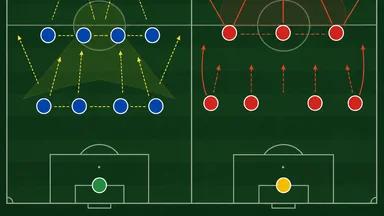
Finally, Dalić could experiment with a different tactical system that minimizes the goalkeeper's role in buildup play. For instance, using a back three with wing-backs could allow the goalkeeper to focus on shot-stopping rather than distribution. This would suit Labrović's strengths while masking his weaknesses. The trade-off is that it reduces Croatia's attacking width, but it might be worth the sacrifice to protect the defense.
The Bottom Line: Croatia's Ceiling Is Tied to Livaković's Health
Croatia's realistic ceiling for 2026 is a quarterfinal or semifinal appearance, provided Livaković stays fit. If he plays every match at his 2022 level, the team has the defensive organization and midfield creativity to trouble any opponent. The draw will matter, but Croatia has shown it can beat higher-ranked teams in knockout football.
But if Livaković misses even one match, the calculation changes. An untested goalkeeper facing a round-of-32 or round-of-16 opponent—say, Mexico or Nigeria—would be under immense pressure. One mistake could end the campaign. The 2022 Netherlands example is instructive: Noppert performed well for most of the tournament, but his inexperience in the shootout against Argentina was a factor in the loss.
Croatia's goalkeeper investment lags behind its outfield talent. The country produces world-class midfielders and defenders with regularity, but the goalkeeping pipeline has been dry since the Subašić era. That imbalance is a structural weakness that no amount of tactical tweaking can fully solve.
The 2026 World Cup will likely hinge on one man's hamstring. If Livaković stays healthy, Croatia can dream. If not, the dream may end before the knockout rounds even begin. That is a fragile foundation for a team that has made a habit of overperforming.
In the end, the debate over goalkeeper depth is not just about statistics—it is about risk management. Dalić can take steps to minimize the danger, but he cannot eliminate it. Croatia's fate in 2026 will be decided as much by fortune as by planning. For a nation that has thrived on defying expectations, that uncertainty may be the cruelest twist of all.